TWO TOWERS
ONE USER
Zwei Hochhäuser in München — München (D)
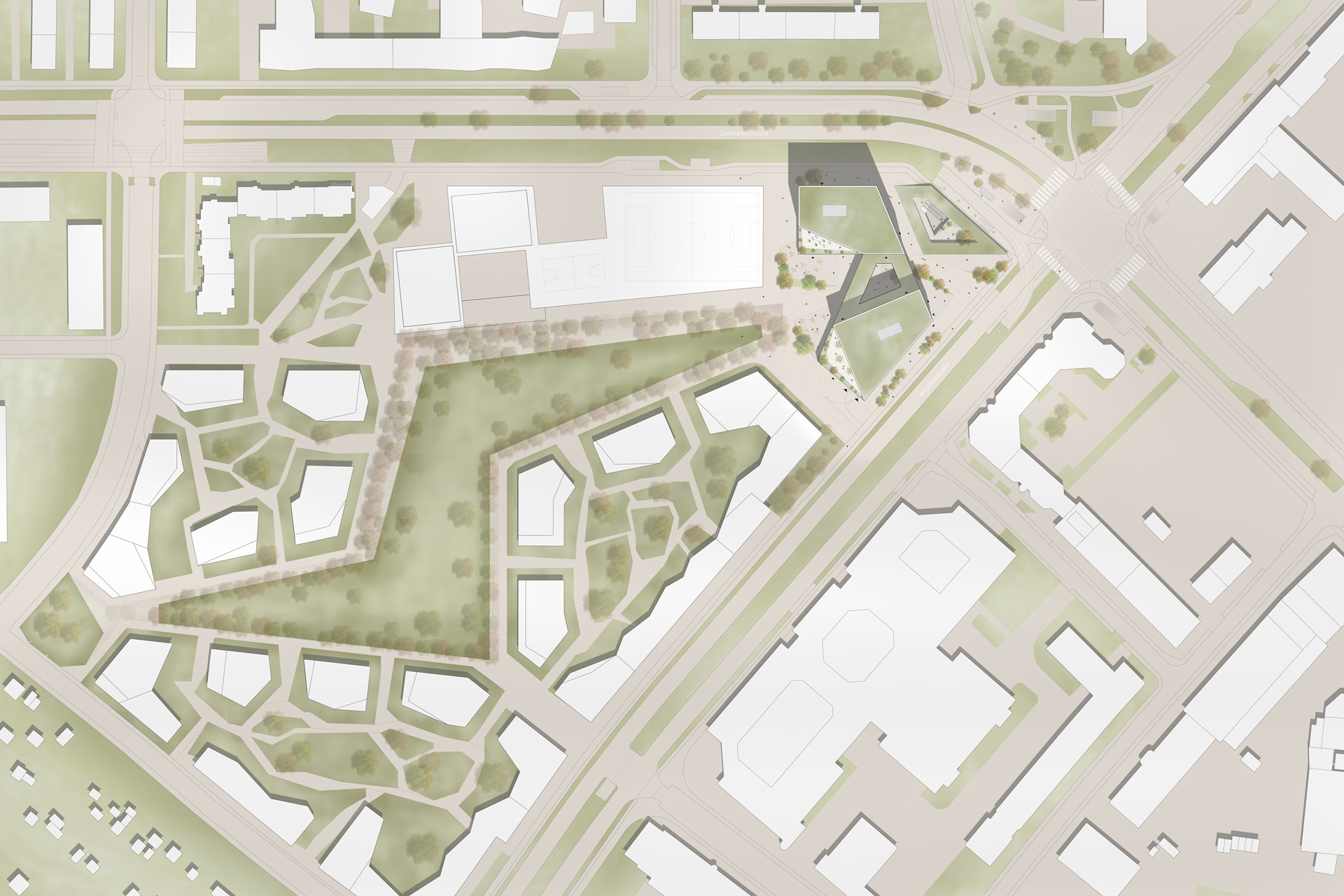
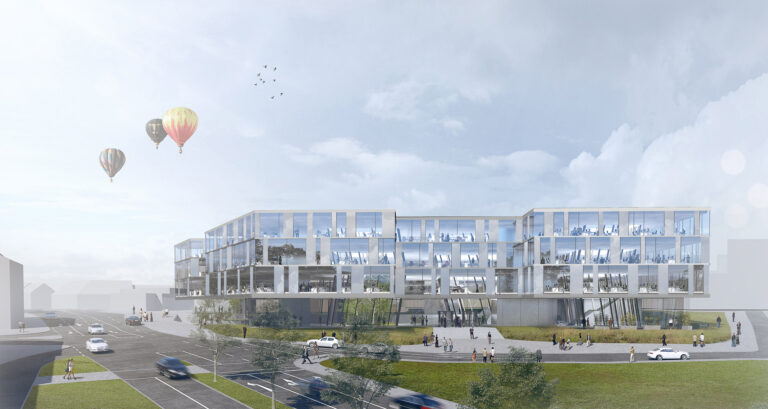
We are located in the Munich district of Laim at the intersection of Westendstrasse and Zschokkestrasse.
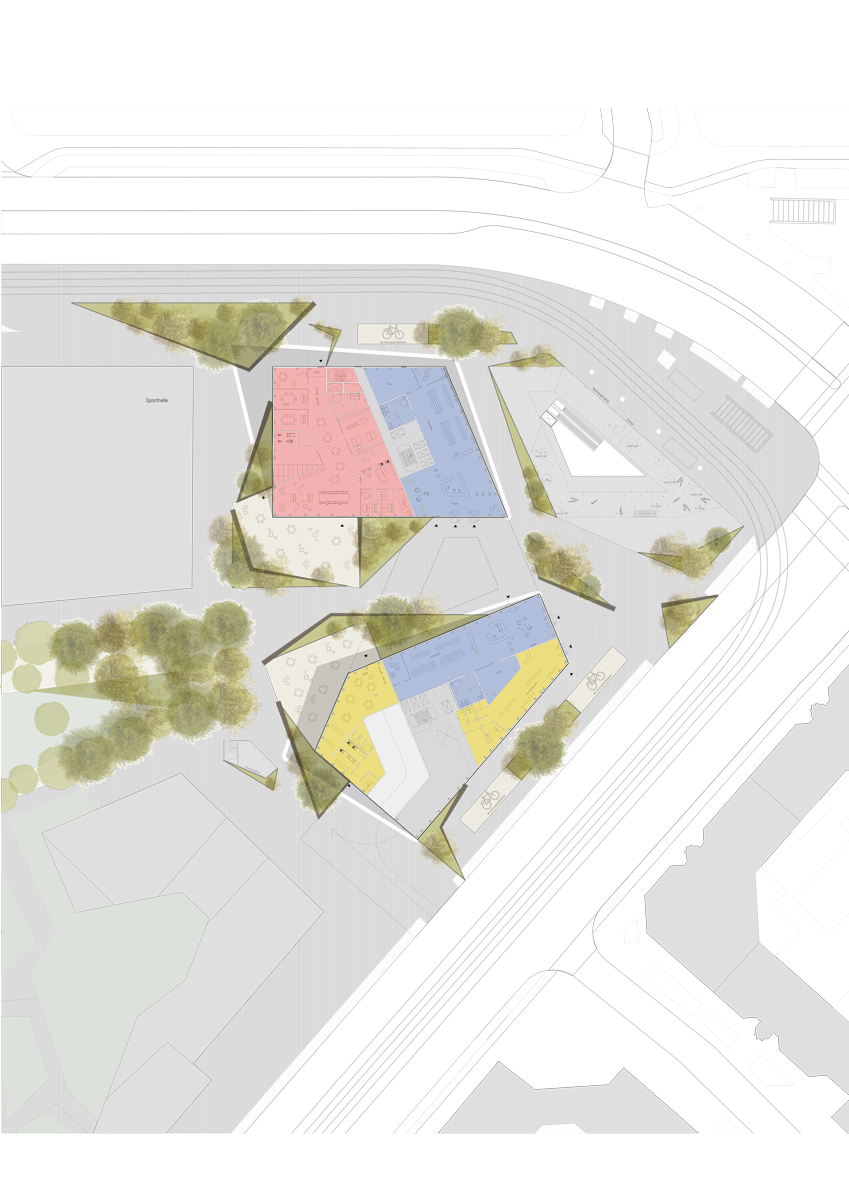
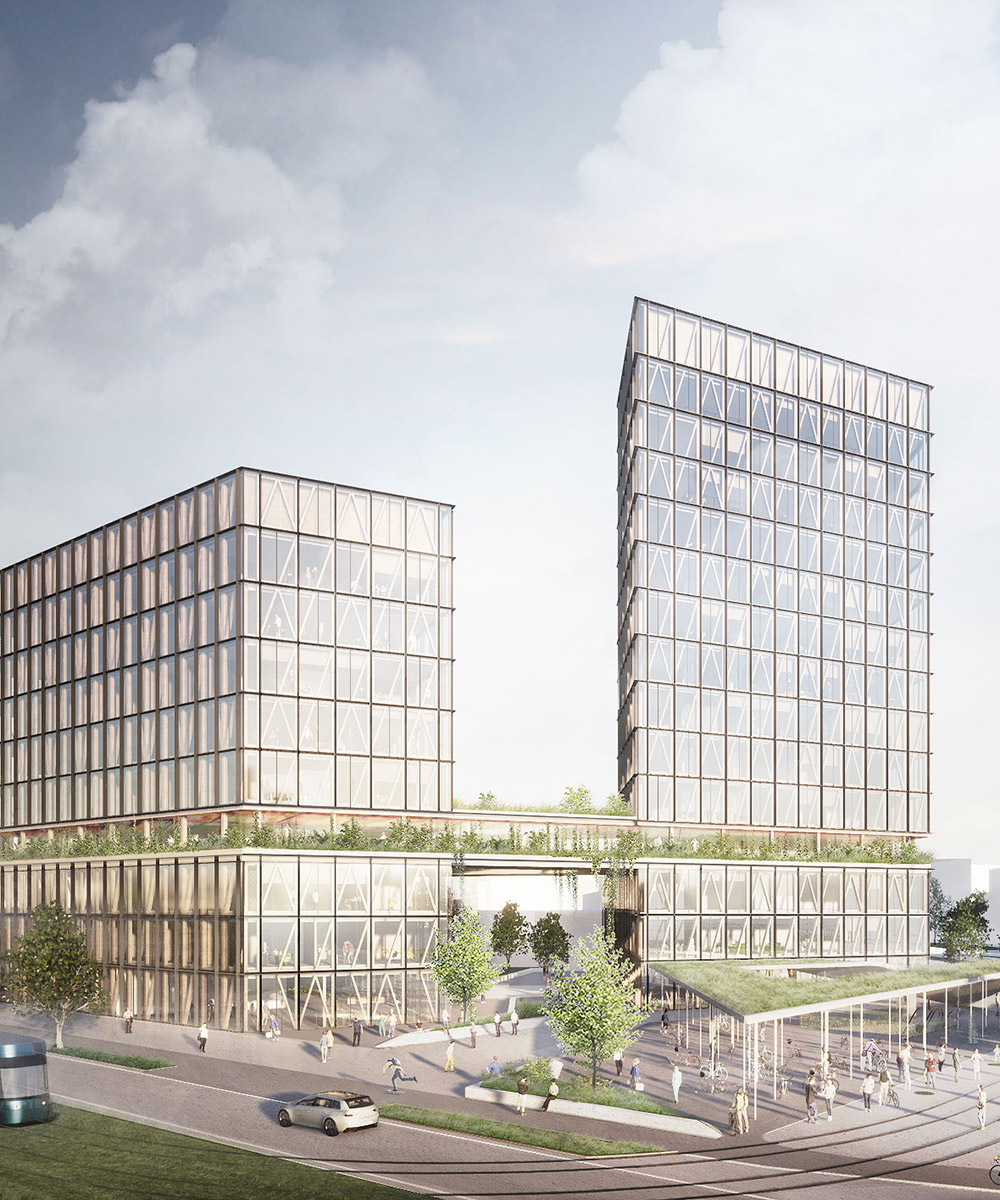
The property located here has an exposed position at the intersection of the two important traffic arteries and forms the entrance to a large-scale urban development area with primarily residential use and a centrally located park directly behind it. An existing development plan provides for two structural high points on the site, which refer to the future residential area. Thus, a kind of bridgehead to this neighborhood is formed and the park already becomes present in the intersection area.
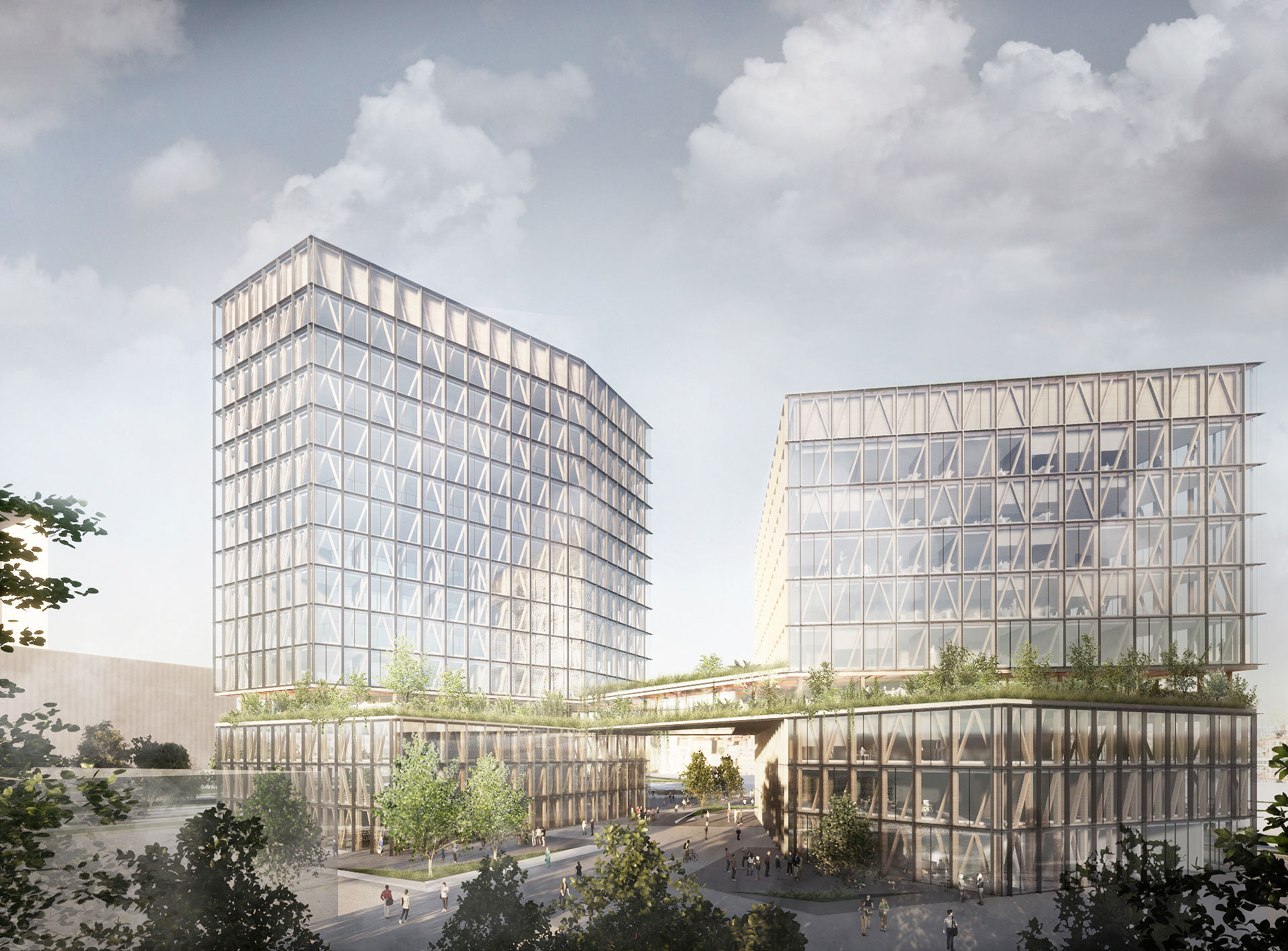
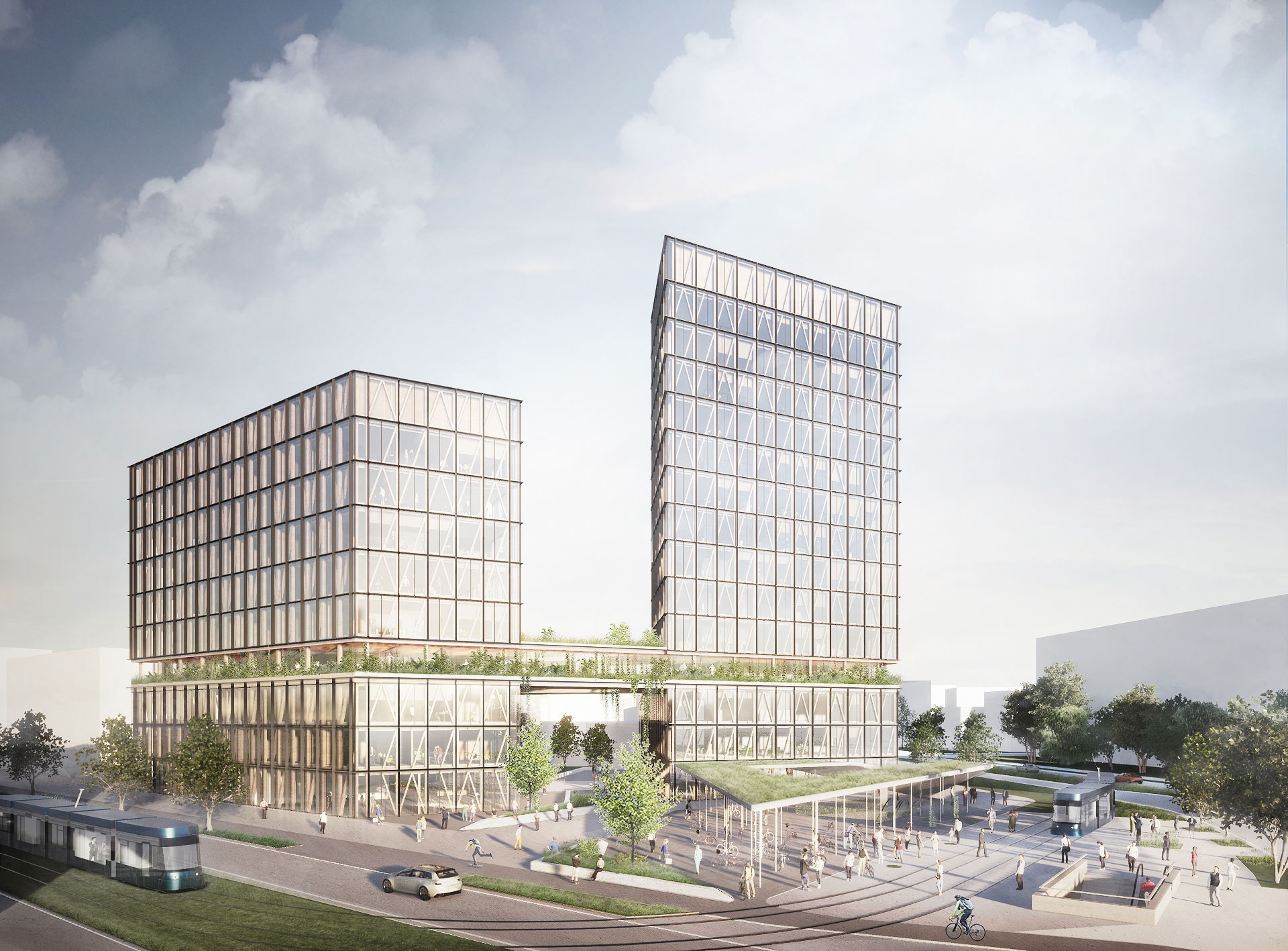
However, Stadtwerke München SWM wants to use the site. They want a coherent, clear and flexible administrative building with customer traffic. The resulting conflict of goals between the urban planning intentions on the one hand and the desire for a compact office building on the other led to the core challenge: Two Towers – One User…..how does that work?
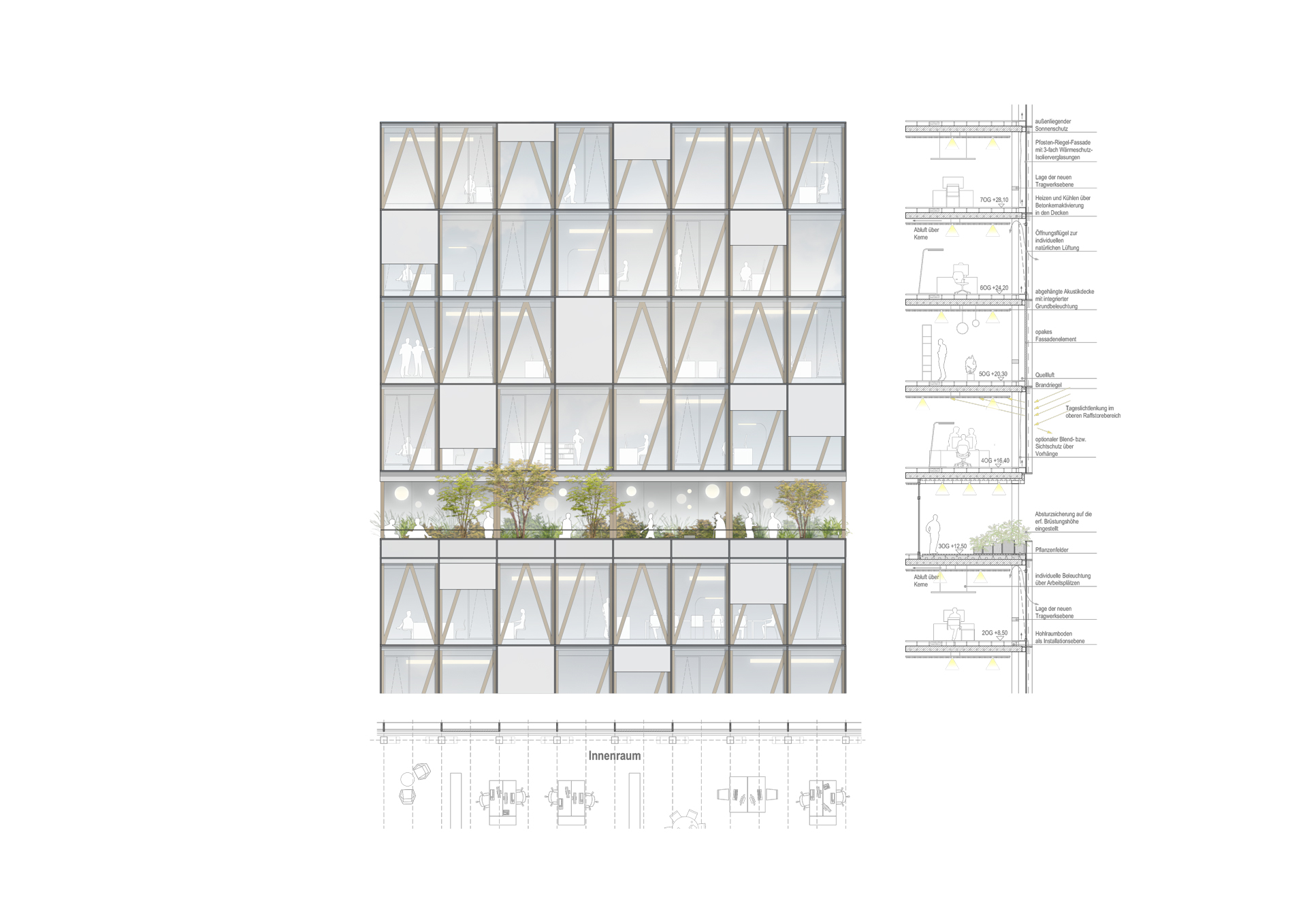
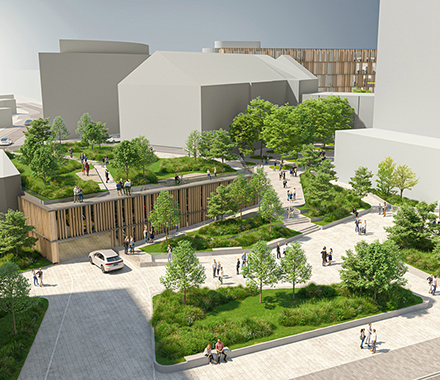
The answer to this question is a green connecting floor on the upper floor 4 of the building, the basic shape of which is reminiscent of a pretzel. This component forms the central connecting and transfer element between the two towers, is equipped with special office uses for all employees and provides access to the large adjacent and lushly landscaped roof terraces. In addition it divides the building into a base area and high points placed on top of it. The plinth zone takes up the building heights of the surrounding structures, while the densely planted joint floor accentuates this seam with a horizontal green line. This is further emphasized by the regularly recessed facade at this level. This draws a kind of building joint – a waist – which visually strengthens the idea of the joint floor as a central connecting element and meeting point.
Dialogue, microclimate and sustainability
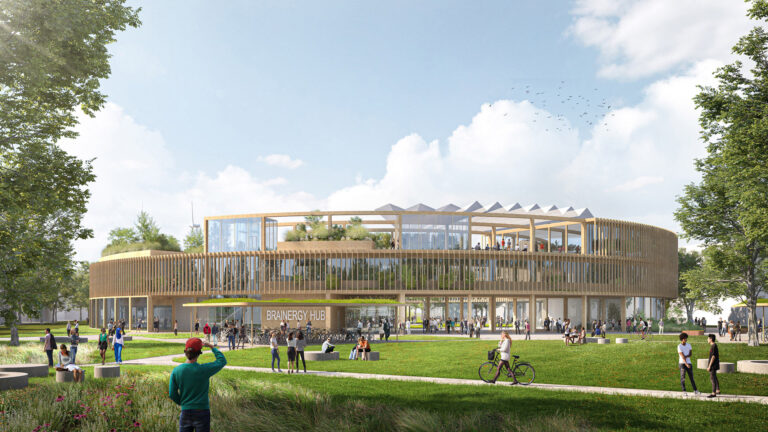
The densely planted roof terraces on the joint floor and the ground floor zone interspersed with „green islands“ not only contribute to improving the microclimatic conditions at the site but also enter into an intensive dialogue with the urban surroundings. The building appears used and animated and thus communicative and open.
The facade construction is made of wood and is therefore also visibly sustainable.